Posts

Will Robots Take Our Children’s Jobs?

Image
Like a lot of children, my daughter, Mayukha, 9, is obsessed with robots. In the children’s books they devour at bedtime, happy, helpful robots pop up more often than even dragons or dinosaurs. The other day I asked Mayukha why children like robots so much. “Because they work for you,” he said. What I didn’t have the heart to tell her is, someday she might work for them — or, I fear, might not work at all, because of them. It is not just Elon Musk, Bill Gates and Stephen Hawking who are freaking out about the rise of invincible machines. Yes, robots have the potential to outsmart us and destroy the human race. But first, artificial intelligence could make countless professions obsolete by the time my daughter reach her 20s. You do not exactly need to be Marty McFly to see the obvious threats to our children’s future careers. The da Vinci surgical robot. Image: Intuitive Surgical Systems Say you dream of sending your daughter off to Yale School of Medicine to become a r...
AR Superpowers

Image
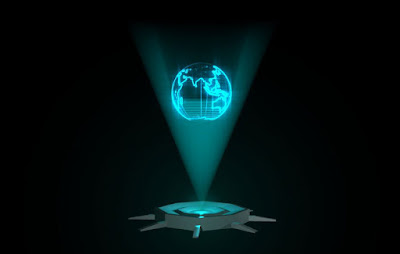
An intuitive design framework for generating Augmented Reality ideas. One of the best ways to think about any new technology is to map out what it empowers users to do that they previously couldn’t. For example, with AR, we can now take almost any 3D product and see it positioned in reality. This is cool, but it’s also not enough. AR has a challenging road ahead of it, headsets are still too bulky, and the capabilities of mobile AR are still too limited. For AR to succeed, the ideas can’t just be good they need to be 10x better than the non-AR alternative. We can’t afford to just empower our users we need to super-empower them. This framework is my contribution to your idealization process. I introduce six categories that (I believe) all AR experiences can be mapped to. These categories can then be used as an aid when designing AR experiences. Holographic projection Holographic projection is the ability for the user to project an idea into reality as a hologram. The user can...

VR “hangover” and Motion sickness ​: What you need to know.

Image
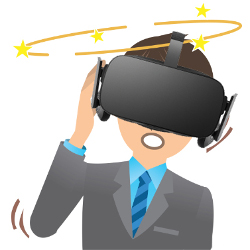
If you’ve tried out a Virtual Reality game, experience or a 360 video and experienced some discomfort during or afterward, you felt a type of motion sickness. The cause: Mixed sensory signals to the brain. The most common one is that your eyes registered horizon movement and the liquids in your inner ear did not. they knew you were on a flat stable surface. Similar to sea or travel sickness, your body reacts to this incongruity by making you feel ill. Your body misinterprets the cause (assuming you ate something poisonous) and triggers the ejection button to try to save you. “ Hangovers ” from technological immersion are now a real situation. Let me explain. You see, your Brain determines your spacial position and movement by using visual signals from your eyes and body(proprioception). Your subconscious is constantly processing motion cues, horizon placement, gravity and a host of other information (only having 5 senses is a myth, there are dozens) including motion signals f...

Augmented Reality in the Classroom

Image
How AR Will Change Learning and Student Engagement With the constant introduction of new and exciting technologies, keeping up with terms and what they mean can get confusing. When we step into the space of virtual and augmented reality, many consider them to be the same thing, or do not know there is a difference. Simply put, if you use a technology to transport you to a different world or place that is not physical to your location, this is virtual reality. Augmented reality on the other hand builds on top of the physical space that exists around you. The Cost of Education Teaching students is expensive. We often think about college expenses when the subjects of money and education are brought up in the same conversation. However, college is just the first instance that a student starts to worry about money and education, because it is now their personal responsibility. The amount of funding needed to create a successful student (before college) is often not met by their ...

New Microsoft Video Explains Motion Controller Tracking

Image
Interacting with and controlling elements in virtual reality (VR) or mixed reality (MR) still feels like an imperfect science, and many companies, from HTC, to Oculus and now Microsoft offer their own solutions for an ideal VR experience. They all share a few common similarities and work in similar ways, but the implementation of the technology each time has been different, and the jury is still out on which is the best control method yet. The video below has various graphs and illustrations to help understand how the MR motion controller and HMD track one another in a 3D space, so it’s well worth watching to understand the new technology. If you haven’t seen much of the new Windows Mixed Reality motion controllers, then you’re in luck, because Microsoft HoloLens’ YouTube channel has released a new video which explains in detail how the motion controller tracking works, including what happens to the controller when the device is unable to locate its exact location. What Micr...

VR could take manipulation to unprecedented levels

Image
What these people are seeing isn’t real – but they might think it is. As Facebook users around the world are coming to understand, some of their favorite technologies can be used against them. It’s not just the scandal over psychological profiling firm Cambridge Analytica getting access to data from tens of millions of Facebook profiles. People’s filter bubbles are filled with carefully tailored information – and misinformation – altering their behavior and thinking, and even their votes. People, both individually and as a society at large, are wrestling to understand how their newsfeeds turned against them. They are coming to realize exactly how carefully controlled Facebook feeds are, with highly tailored ads. That set of problems, though, pales in comparison to those posed by the next technological revolution, which is already underway: virtual reality. On one hand, virtual worlds hold almost limitless potential. VR games can treat drug addiction and maybe help solve the opioid ...

The Educational Potential of Augmented Reality

 7 Great TED Talks on The Educational Potential of Augmented Reality Augmented Reality is radically transforming our life by making the border between the physical and digital reality thinner than ever before.  We have already touched upon the huge potential of augmented reality in education and have featured a wide variety of tools and mobile apps teachers and educators can use to effectively integrate this technology into their teaching. This excellent collection of TED talks tackling the topic of augmented reality from different perspectives.  These include the use of AR to revolutionize the teaching of science in schools, how AR is changing the future of journalism, the use of AR in the study of biology, how AR is revolutionizing the world of music and art and many more. Enjoy 1- This virtual lab will revolutionize science class by Michael Bodekaer 2- The future of news? Virtual reality by Nonny de la Peña 3- Animate characters by evolving them by T...